Inverness vs Piercing Gun — Which Method Is Safer?
Ear piercing is one of the most commonly performed aesthetic procedures - both for children and adults. Although the procedure may seem simple at first glance, the choice of piercing method is crucial for safety, comfort, and the healing process. In Warsaw, two techniques are most commonly used: the traditional ear-piercing gun and the medical system Inverness Med (USA). The differences between them go far beyond the method of operation - they also concern sterility, infection risk, pain level, and long-term health effects.
In this article, we objectively and practically compare both methods, based on real experience working with children and adults. You will learn how to choose a safe ear-piercing method and why a medical system is superior to a piercing gun.
Why does the ear-piercing method matter?
The ear - especially a child’s earlobe - is a delicate structure rich in blood vessels and soft tissue. Every piercing is a controlled injury that should:
- cause as little tissue damage as possible
- be performed under fully sterile conditions
- allow for fast and calm healing
An inappropriate method can lead to:
- inflammation
- bacterial infections
- excessive swelling
- healing complications
- allergic reactions
- and, in extreme cases, deformation of the earlobe
Choosing the right ear-piercing studio and method directly affects a child’s comfort for many weeks of healing. That is why it is important to understand the differences between available techniques before making a decision.
What is the Inverness Med medical system?
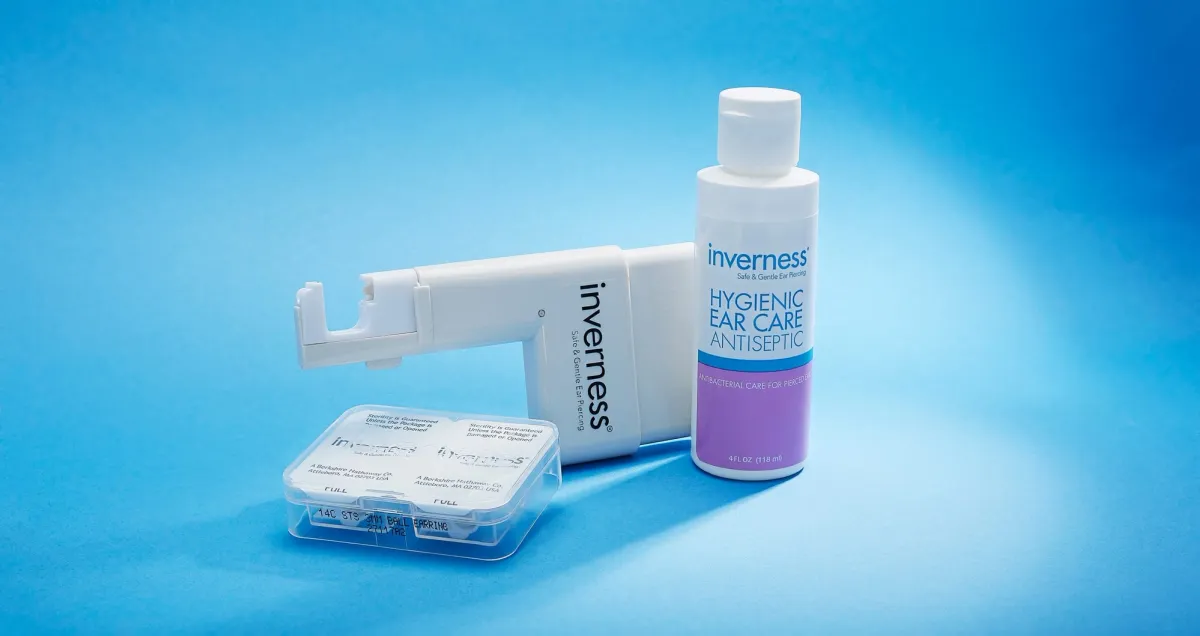
Inverness Med is a certified medical ear-piercing system used in studios, pharmacies, and clinics worldwide. It was designed to provide maximum safety, precision, and patient comfort.
The system works through smooth, controlled manual pressure rather than mechanical impact. Each piercing is performed using a single-use, sterile cartridge containing an earring with a built-in needle.
Key features of the Inverness Med system include:
- no spring-loaded mechanism
- no sudden impact
- full control over the piercing movement
- single-use components for all skin-contact elements
- FDA, REACH, and ISO 13485 certifications
Inverness Med was developed specifically for safe ear piercing in infants and young children. Unlike traditional methods originating in the jewelry industry, Inverness Med was designed from the beginning as a medical device meeting the highest safety standards.
Sterility and safety in the Inverness Med system
One of the most important aspects that distinguishes Inverness Med from a piercing gun is the level of sterility.
With the Inverness Med system:
- each earring is sealed in a hermetically closed, sterile cartridge
- the needle is laser-sharpened to reduce tissue resistance
- the system complies with FDA and REACH standards
- there is no contact with air or the environment before the procedure
- every component is used only once
As a result, the risk of infection is minimal, and the procedure meets medical standards. Sterile ear piercing is the foundation of safety, especially when piercing the ears of infants and young children.
Single-use cartridge - zero-contact technology
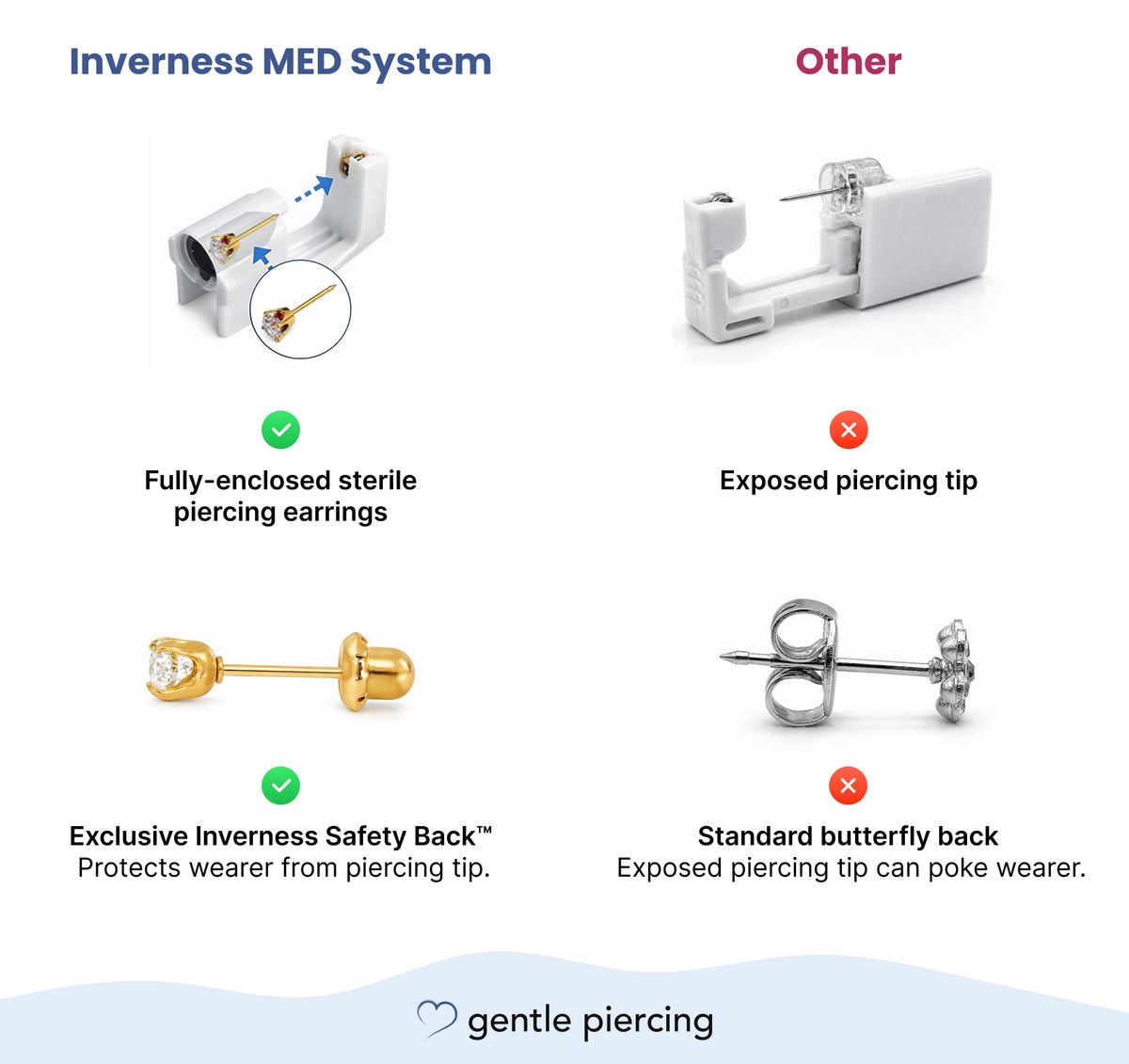
The sterile cartridge is a closed system containing an earring with a built-in needle, a Safety Back clasp, and hermetically sealed sterile packaging with an expiration date. Once the cartridge is placed into the Inverness Med applicator, the practitioner has full control over the procedure. There is no automatic mechanism and no unpredictable impact - only a smooth, precise movement.
How does a traditional ear-piercing gun work?
An ear-piercing gun operates using a sudden spring-loaded impact that forces the earring through the ear tissue. In practice, this means:
- a sudden impulse
- lack of smooth motion control
- greater damage to soft tissues
- a loud noise reaching 80-90 decibels
Additionally, most piercing guns:
- are not single-use devices
- contain internal mechanisms that are difficult to fully sterilize
- were originally designed for piercing by jewelers, not piercers
- do not have medical certifications
Piercing guns were developed in the 1960s as tools for jewelers. Only later were they adopted for ear piercing, despite not being designed to meet medical safety standards.
Disadvantages of ear piercing with a gun
From a safety and comfort perspective, piercing guns have significant limitations:
- greater tissue trauma - impact instead of incision
- loud noise that causes fear in children
- lack of full sterility of the mechanism
- risk of cross-infection (HBV, HCV, HIV)
- slower and more difficult healing
- higher risk of swelling and post-procedure pain
- mechanical tearing of tissue instead of precise cutting
For these reasons, piercing guns are not recommended for infants or young children by professional piercing and medical organizations.
Sterilization issues with piercing guns
Ear-piercing guns contain many plastic components that cannot be autoclaved (sterilized at high temperatures). While chemical disinfectants can be used, they do not guarantee full medical sterility. In practice, even the most thorough disinfection does not fully eliminate the risk of pathogen transmission, posing a real threat - especially for young children with developing immune systems.
Inverness Med vs piercing gun - detailed comparison
| Criterion | Inverness Med | Piercing Gun |
|---|---|---|
| Mechanism | Smooth manual pressure | Sudden spring-loaded impact |
| Sterility | Sealed single-use cassette | Limited, requires disinfection |
| Noise | None (silent) | Loud (80-90 dB) |
| Pain level | Minimal | Higher |
| Precision | Very high | Limited |
| Suitable for children 0+ | Yes | Not recommended |
| Healing time | 6 weeks lobe / 12 weeks cartilage (IFU) | 6-8 weeks lobe (typical) |
| Infection risk | Minimal | Higher |
| Certifications | Listed in the FDA device database | None |
| Process control | Full, manual | Automatic, unpredictable |
Why is Inverness Med the best choice for children 0+?
Ear piercing in infants and young children requires exceptional gentleness, experience, and procedural control.
The Inverness Med system:
- is silent, avoiding sudden stress
- does not cause pain shock
- allows precise marking of the piercing location
- uses hypoallergenic medical-grade titanium earrings
- minimizes the risk of complications
- provides full control over the piercing process
For these reasons, it is the method most often chosen by parents in Warsaw who are looking for a safe solution for their children.
→ Ear piercing for children Warsaw
The importance of earrings in the healing process
In the Inverness Med system, the earring serves as both a tool and jewelry. This plays a critical role in healing.
The earrings:
- are made from hypoallergenic materials (medical-grade titanium, surgical steel, niobium)
- feature a Safety Back clasp that does not compress the ear
- allow airflow to the piercing channel
- reduce the risk of pressure sores and inflammation
- are dermatologically tested
Safety Back clasp - comfort and protection
Traditional earring backs (so-called butterfly backs) can compress the earlobe during healing. The Safety Back clasp automatically adjusts to the thickness of the earlobe, leaves sufficient space for swelling, and is safe for children.
Ear piercing for adults - does the method matter?
Adults are also susceptible to infections, healing problems, keloids, and allergic reactions. The Inverness Med system ensures sterility, precision, and comfort for additional piercings as well.
→ Ear piercing for adults Warsaw
Summary - which method is safer?
The Inverness Med medical system clearly outperforms piercing guns in terms of safety, sterility, and comfort.
At Gentle Piercing, we work exclusively with the Inverness Med system, offering safe ear piercing for children 0+ and adults.
FAQ - frequently asked questions
Is the Inverness Med system safer than a piercing gun?
Yes. Thanks to single-use sterile cartridges and smooth manual pressure, Inverness Med significantly reduces the risk of infection.
Is ear piercing safe for infants?
Yes, provided an appropriate sterile medical method is used.
Does piercing with the Inverness Med system hurt?
Pain sensations are minimal and short-lived.
Why is a piercing gun not recommended for children?
Due to noise, sudden impact, and the lack of medical safety standards.
How long does healing take after ear piercing?
Leave earrings in for 6 weeks (lobe) or 12 weeks (cartilage) — Inverness instructions.
Can I change earrings before healing is complete?
No. The initial earrings should remain in place throughout the entire healing period.
Which earring materials are the safest?
Medical-grade titanium, niobium, and surgical steel. No silver.